
In the metal fabrication industry, complex forming tasks—such as creating intricate tube profiles, multi-step geometries, or tight-tolerance components—have long posed challenges for manufacturers. These tasks often require specialized skills, multiple pieces of equipment, and painstaking attention to detail, leading to longer lead times, higher error rates, and increased operational costs. However, IO forming machines have emerged as a transformative solution, streamlining even the most complex forming processes through smart automation, precision engineering, and integrated workflows. For fabricators across automotive, aerospace, HVAC, and industrial sectors, these advanced machines simplify complexity, turning once-daunting tasks into efficient, reliable operations.
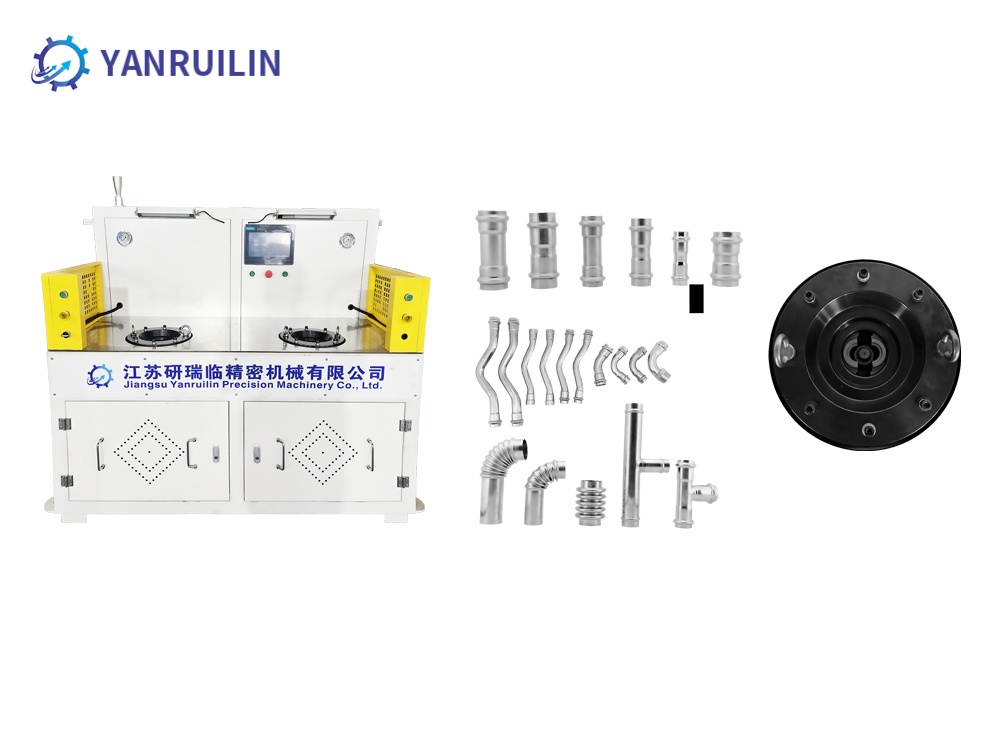
Complex forming tasks typically involve multiple sequential steps—such as flaring, beading, swaging, and custom profiling—along with strict requirements for dimensional accuracy, material integrity, and repeatability. Traditional methods rely on manual adjustments, separate machines for each step, and constant operator oversight to ensure consistency. This fragmented approach not only increases the risk of human error but also extends production time, as components must be transferred between workstations, repositioned, and rechecked at each stage. For fabricators working with high-strength materials or intricate designs,the challenges are amplified—even minor deviations can render components unusable, leading to costly rework and material waste.
IO forming machines address these complexities by integrating all necessary forming steps into a single, automated system. Equipped with multi-station tooling and programmable CNC technology, these machines can execute complex sequences—from initial material feeding to final profiling—in a single pass. For example, a fabricator needing to produce a tube with a flared end, a bead for fitting retention, and a custom swage for fluid flow optimization can program the entire sequence into the IO machine, which then completes each step automatically with micron-level precision. This eliminates the need for multiple machines, manual transfers, and repeated setups, simplifying the workflow and reducing the risk of errors caused by human intervention or component handling.
Precision control is a key factor in simplifying complex forming tasks with IO machines. Unlike traditional equipment that relies on manual force or inconsistent pressure application, IO forming machines use servo-driven systems and advanced sensors to deliver uniform, adjustable force across the material. This ensures that even complex geometries—such as thin-walled tubes with intricate bends or thick-walled components requiring deep swaging—are formed without deformation, wall thinning, or cracking. Real-time feedback systems continuously monitor the forming process, adjusting parameters (such as pressure, speed, and tool positioning) to compensate for material variations or environmental factors. For fabricators, this means complex tasks that once required constant quality checks and adjustments can now be completed with consistent, reliable results—reducing the need for rework and ensuring compliance with strict industry standards.
Versatility is another critical feature that makes IO forming machines ideal for simplifying complex tasks. These machines are designed to handle a wide range of materials—from lightweight aluminum and copper to high-strength alloys and stainless steel—without compromising performance. They can also adapt to diverse component sizes, wall thicknesses, and custom profiles, with quick-change tooling systems that enable fast reconfiguration between different tasks. For fabricators facing high-mix production demands—such as producing custom components for multiple industries or adapting to changing customer specifications—this versatility eliminates the need for specialized machines for each application, simplifying inventory management and reducing capital expenditure.
Intelligent programming and user-friendly interfaces further simplify complex forming tasks for fabricators. IO forming machines feature intuitive touchscreen controls and pre-loaded forming templates for common complex tasks, allowing operators to program even intricate sequences with minimal training. Advanced software enables 3D simulation of the forming process, letting fabricators visualize the final component and identify potential issues before production begins. This eliminates the need for trial-and-error testing, which is both time-consuming and wasteful for complex tasks. Additionally, the ability to store and recall program settings for repeat orders ensures consistency across batches, even for the most complex designs—simplifying production planning and reducing the risk of errors.
Automated material handling and integration with smart manufacturing systems further streamline complex forming workflows. Many IO forming machines integrate with robotic loading/unloading arms, conveyor systems, or automated feeders, eliminating manual component handling and reducing cycle times. IoT (Internet of Things) connectivity allows for remote monitoring and control, enabling fabricators to oversee complex forming tasks from anywhere, adjust parameters in real time, and track production metrics. Predictive maintenance features also simplify operations by identifying potential equipment issues before they cause downtime—ensuring that complex forming tasks proceed without interruptions.
For fabricators, the simplification of complex forming tasks translates to tangible business benefits. Reduced setup time, fewer production steps, and automated quality control cut lead times significantly, allowing fabricators to meet tight delivery deadlines and take on more complex projects. Lower error rates and material waste reduce operational costs, while the ability to handle diverse complex tasks with a single machine improves productivity and flexibility. For small to mid-sized fabricators, in particular, IO forming machines level the playing field by enabling them to tackle complex projects that were once only feasible for larger manufacturers with specialized equipment and skilled labor.
As manufacturing demands grow more complex—with increasingly intricate component designs and stricter quality requirements—IO forming machines continue to evolve to meet the needs of fabricators. Advancements in AI-driven process optimization, machine learning, and adaptive tooling promise to simplify even more challenging forming tasks in the future, further enhancing efficiency and reliability. For fabricators seeking to overcome the barriers of complex forming, IO machines are not just a tool but a strategic investment that simplifies operations, reduces risks, and unlocks new opportunities for growth.
In a industry where complexity often translates to cost and delay, IO forming machines prove that intelligent automation can turn challenges into advantages. By simplifying complex forming tasks through precision, versatility, and integration, these advanced systems empower fabricators to deliver high-quality, complex components efficiently and reliably—solidifying their position in a competitive global market. As fabricators continue to embrace smart manufacturing, IO forming machines will remain at the forefront of simplifying complexity, driving innovation, and shaping the future of metal fabrication.
この Web サイトでは、お客様に最高のエクスペリエンスを提供するために Cookie を使用しています。

 English
 Español
 Pусский
 Deutsch
 한국어
한국어 Italiano
 Türk dili
 हिन्दी
 Indonesia


コメント
(0)